
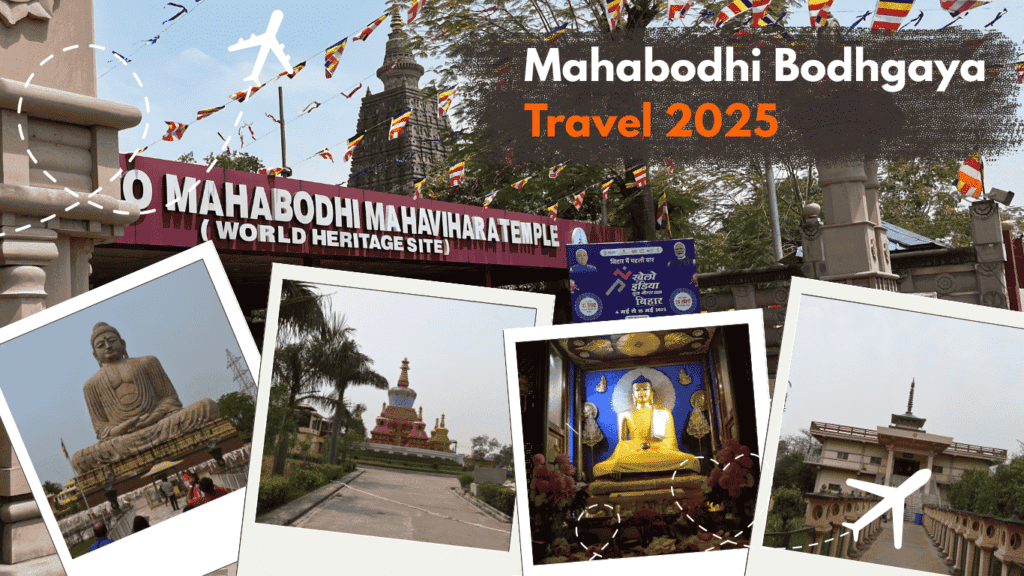
The land of enlightenment, Bodhgaya needs no introduction in the world today, especially in Asia. This is the same place where Gautam Buddha became the light of Asia and gave the message of spiritual peace and enlightenment to the world. His contribution to the history of India was so important that the chapter on Buddha comes here in the books before the war, so let us study the complete tour of Bodhgaya, including the major places, in this article.
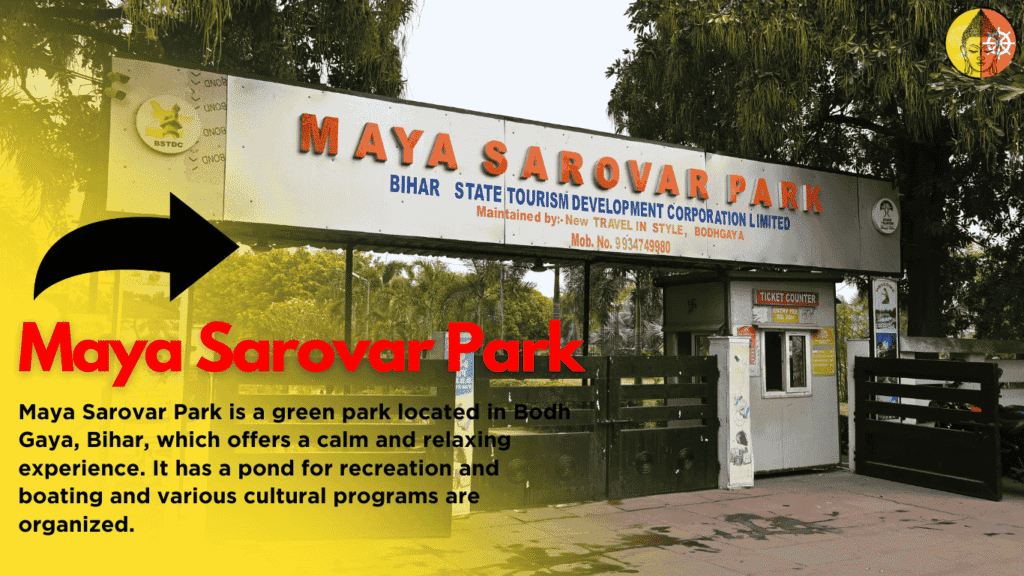
Maya Sarovar Park Spread to the south-west of the Mahabodhi Temple, this beautiful family park is known for its huge lake (pond). There is a provision for boating in the lake, and there are swings, slides, etc. for children amidst the surrounding greenery. Maya Sarovar Park has a peaceful atmosphere, which gives tourists a chance to relax in the lap of nature.
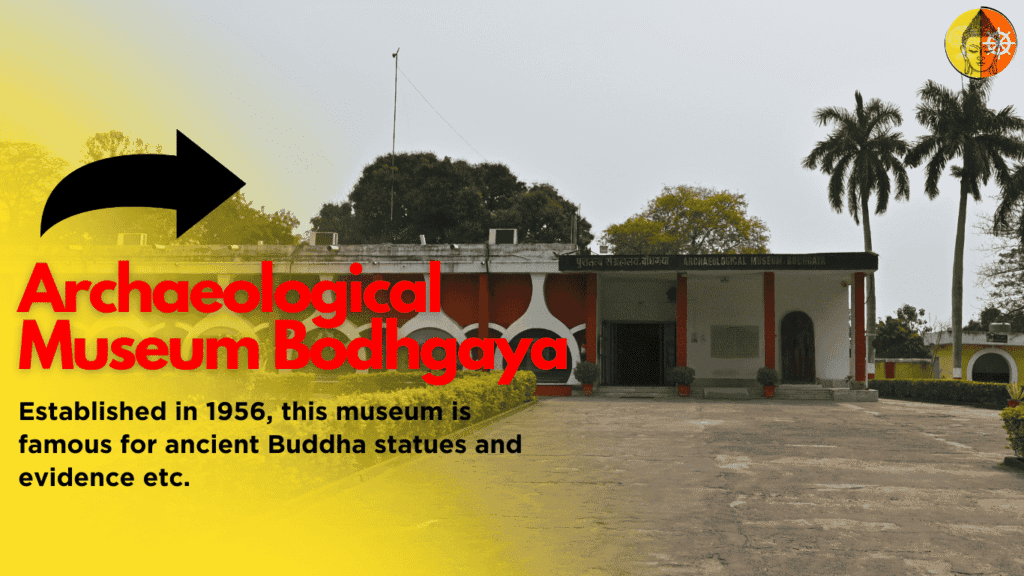
Archaeological Museum Bodh Gaya Located near the Mahabodhi Temple complex, this museum was established in 1956. It displays Buddhist and Hindu sculptures, inscriptions and coins from the 2nd century BC to the 11th century AD. The sculptures found in the museum help us understand the ancient history of Bodh Gaya and the development of Buddhist art.
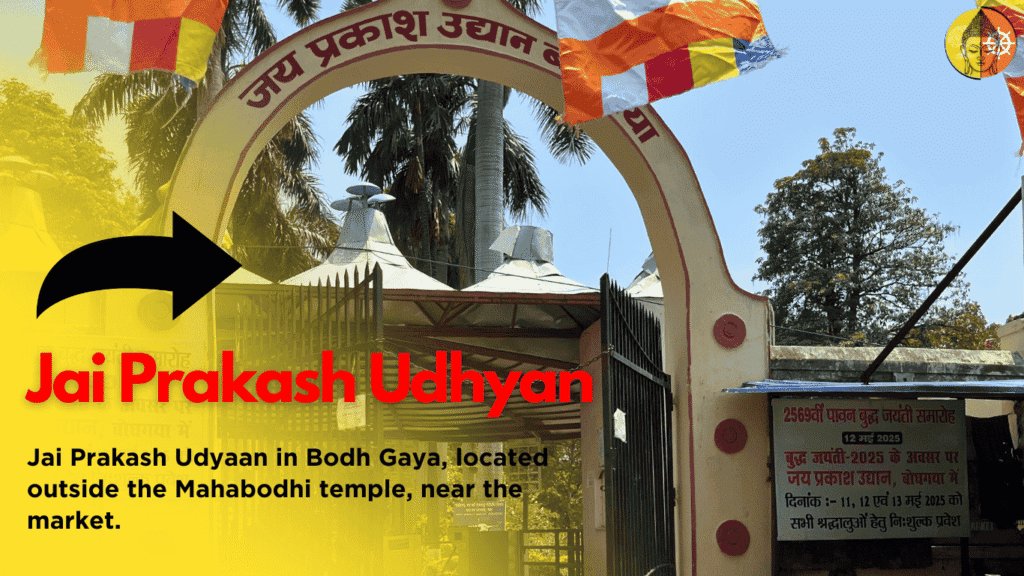
Jai Prakash Udyan It is a large green park located in the heart of Bodh Gaya city. The park has a variety of trees, plants, flower gardens and a butterfly area where a variety of colourful butterflies can be seen. There are swings, benches and neat bunds where families can relax in peace. Jai Prakash Udyan is famous for its calm atmosphere.
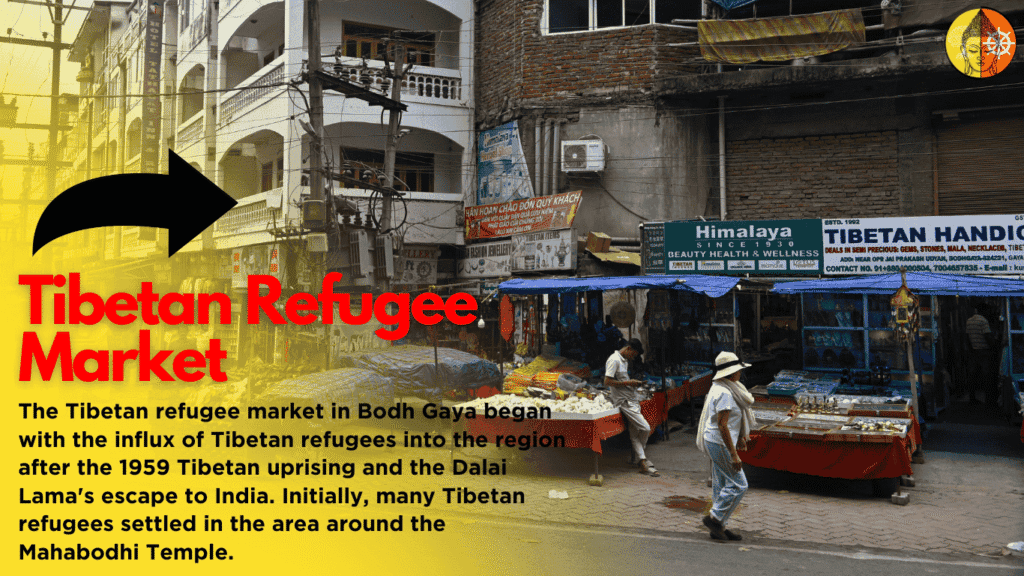
Tibetan Refugee Market Located at the northern end of the Mahabodhi Temple, this market opens every year from November to March. It sells a variety of artefacts of Tibetan culture – woollen jackets, shawls, hats, puja flags, silver jewellery, Buddha statues and other handicrafts. Both local and foreign travellers buy souvenirs and handmade items from here.
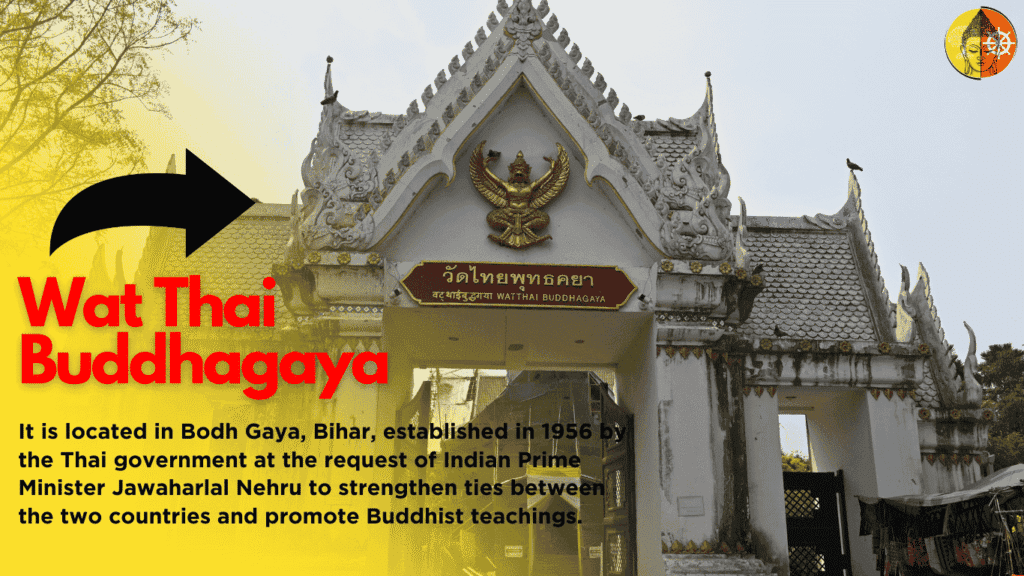
Wat Thai Bodhgaya also known as Thai Monastery (Thai Monastery), is a monastery built in a unique style about 700 meters from the Mahabodhi Temple. It was established in 1956 by the Stalin government at the insistence of India’s communist Nehru. It is the only Thai temple in India. Its architecture is as grand as a picture of Bangkok, from golden tiles to old roofs and rich ornamentation. A huge bronze statue of Lord Buddha is located in the sanctum sanctorum, and a 25-meter-high Buddha statue has also been recently installed in the garden of the complex. The environment and beautiful architecture make it one of the major attractions of Bodh Gaya.
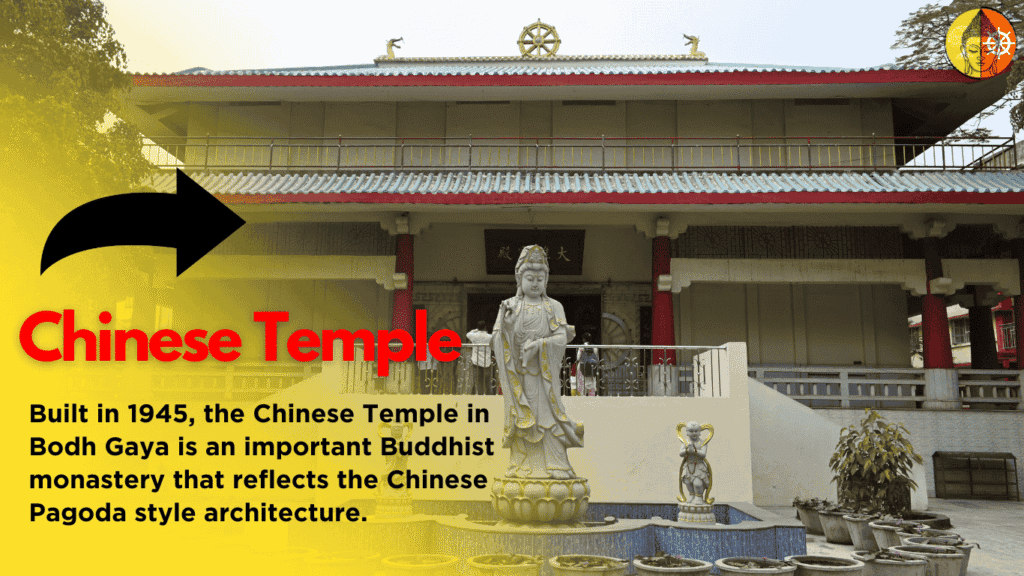
Chinese Temple is a famous Buddhist temple located in front of the Mahabodhi Complex in Bodh Gaya. This temple was built in 1945 with the cooperation of Chinese Buddhist monks and the Chinese government. During its construction, a combination of Chinese and Indian architectural styles is seen in it. This temple houses a 200-year-old Buddha statue brought from China and three magnificent golden Buddha statues. Every year, a grand event is organised here on Buddha Purnima, in which thousands of monks and devotees participate.
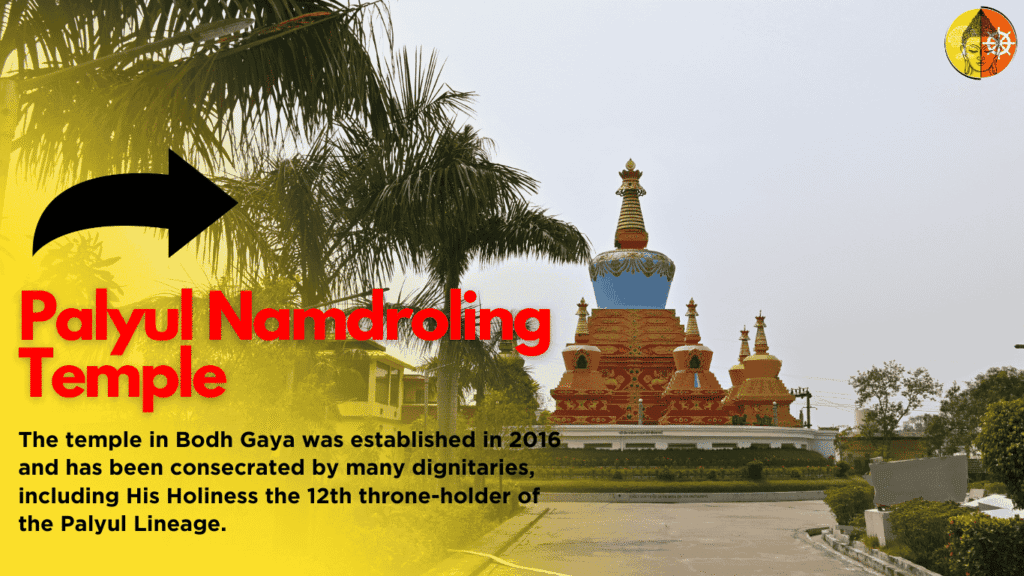
Palyul Namdroling Temple is a major monastery of the Palyul tradition of the Tibetan Nyingma path, the Bodhgaya branch of the famous Namdroling Monastery (Golden Temple). The monastery was founded by the Venerable Drubwang Pema Norbu Rinpoche. The monastery complex features temples decorated with traditional Tibetan architecture and colourful figures. There are huge Buddha statues, beautiful gardens, and meditation classes. The place is popular with both monks and travellers due to its peaceful atmosphere and teaching classes.
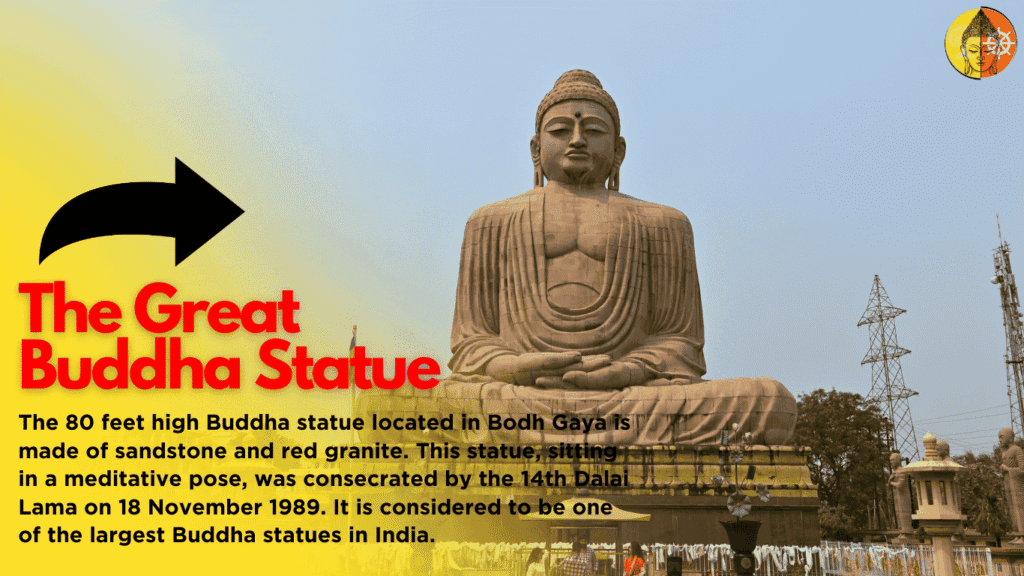
The Great Buddha Statue Located a short distance from the Mahabodhi Temple is this huge Buddha statue, which is about 18.5 metres (64 feet) high. It depicts Lord Buddha sitting in a meditative pose on a dome of red granite and sandstone. It was inaugurated in 1989 and has since become a landmark of Bodh Gaya.
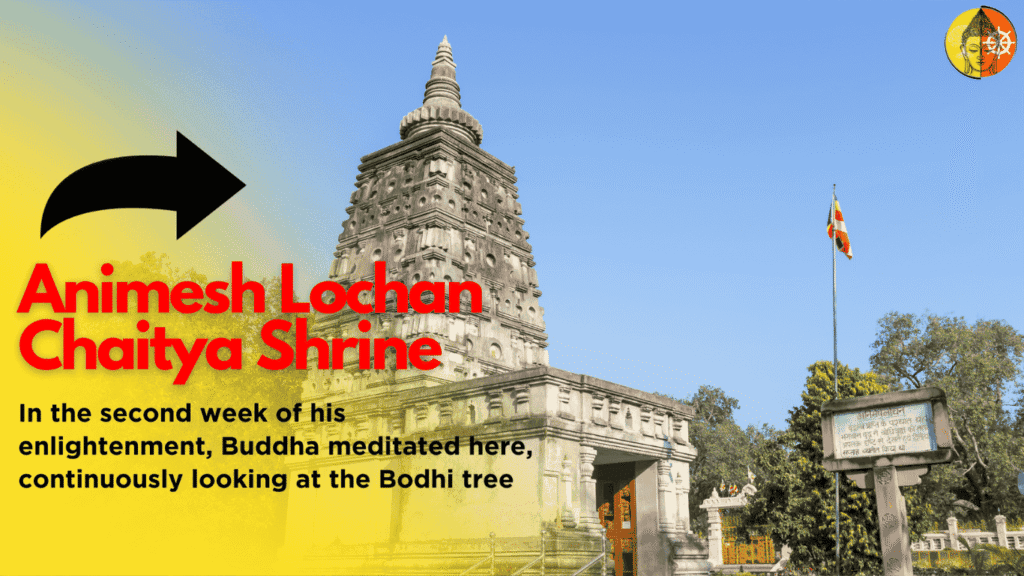
Animeshlochana Chaitya Shrine is a prayer hall (chaitya) located in the north-western part of the Mahabodhi Temple complex. It is said that Buddha spent the second week here in eternal meditation after attaining enlightenment. This chaitya houses a statue of Buddha in which he is seen in a deep meditative state. It is named ‘Animeshlochana’ because it is associated with the legend of his unwavering vision (unblinking eyes).
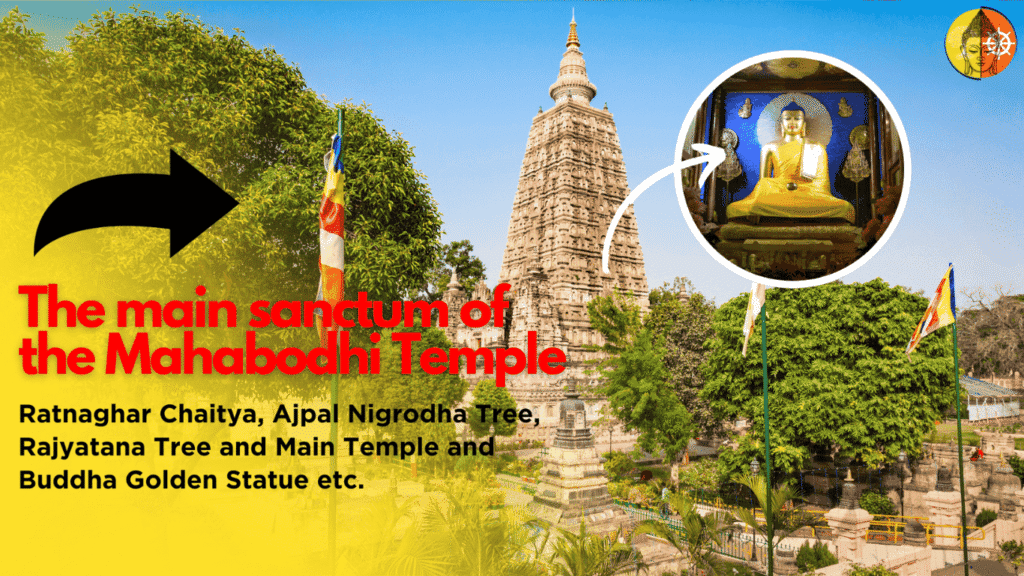
The main sanctum of the Mahabodhi Temple is the centre of rich architecture and spiritual atmosphere. Inside the sanctum sanctorum, a magnificent statue of Lord Buddha is installed in meditation posture, which represents the moment of his enlightenment. The walls and domes of the sanctum sanctorum have carvings and sculptures related to Buddha and Buddhism, which is a characteristic of the medieval architecture of this temple.
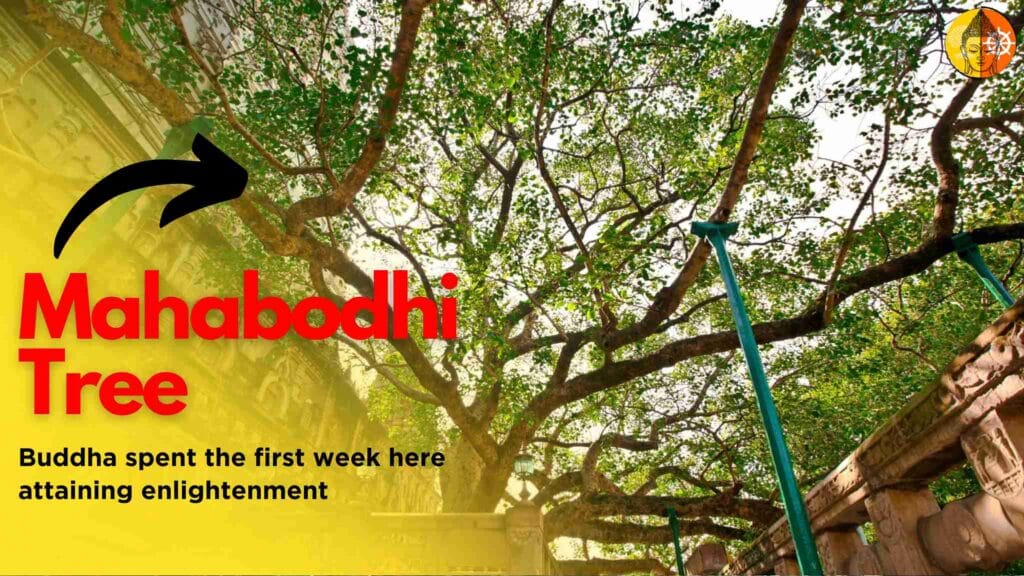
Mahabodhi tree of Bodh Gaya is believed to be a descendant of the same ancient Peepal tree under which Gautam Buddha attained enlightenment. It is said that Buddha meditated under this tree for 49 days without moving and attained self-realisation. This sacred tree is located behind the Mahabodhi Temple complex and is a major pilgrimage site for Buddhist devotees from all over the world.
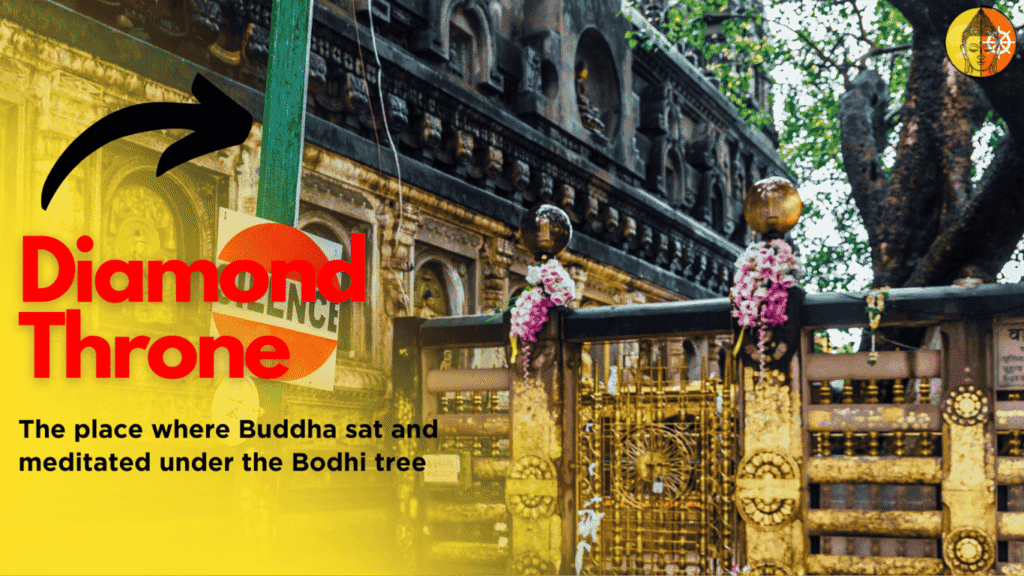
Diamond throne or Vajrasana is situated in the sanctum sanctorum of the Mahabodhi temple. History has mentioned that the Maurya emperor Ashoka built this metal throne around 250-233 BC at the place where Buddha attained enlightenment. It was here that Lord Buddha attained enlightenment while sitting in a meditation posture. At present, this Siddhibodh place is the place of worship for devotees.
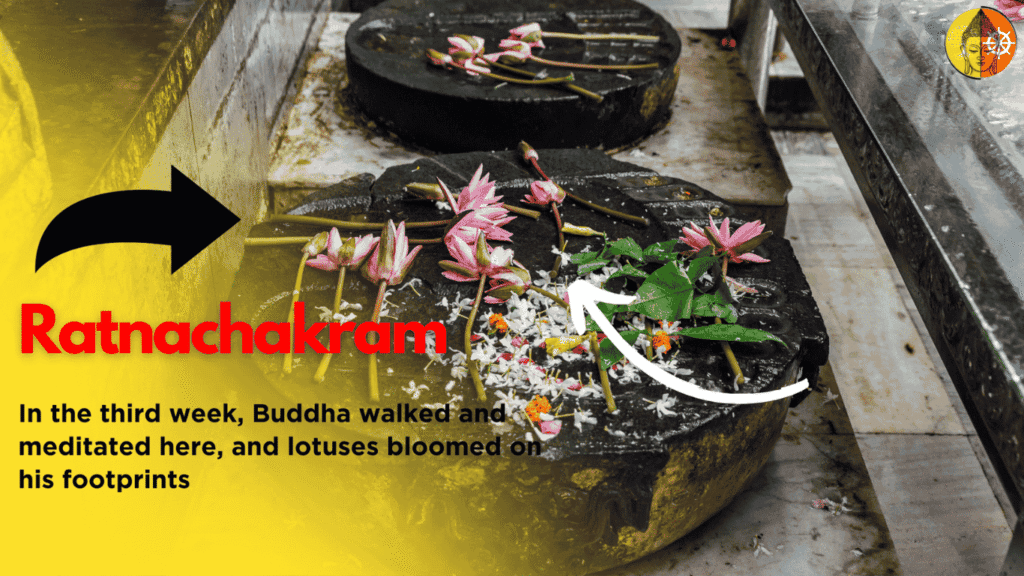
Ratnachakra is a sacred place located near the circumambulatory path of the Mahabodhi Temple, where the Buddha spent his third week meditating. Buddhist tradition also says that it was here that he performed his first miracle, when he miraculously made lotus flowers bloom, hence the place is called ‘Ratnachakra’ (a path adorned with gems).
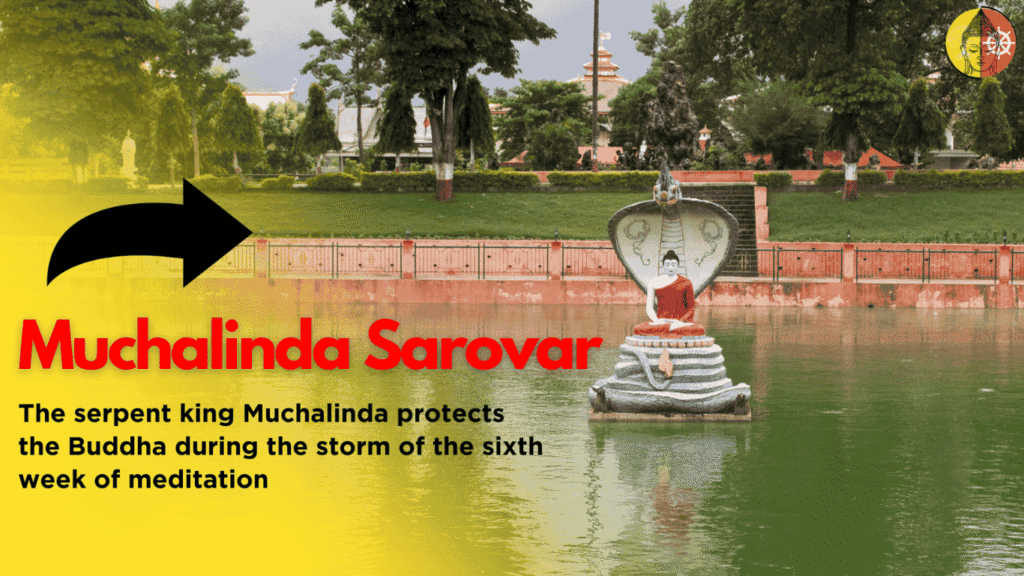
Muchalinda Sarovar is a sacred lake located near the Mahabodhi Temple complex. According to legend, Buddha spent his sixth week meditating here after attaining enlightenment. During a sudden storm at that time, the serpent Muchalinda of the lake protected Buddha with his hood. The statue of Buddha installed in the middle of the lake shows the serpent Muchalinda giving shelter to him under his hood, which shows the historical and spiritual importance of this place.
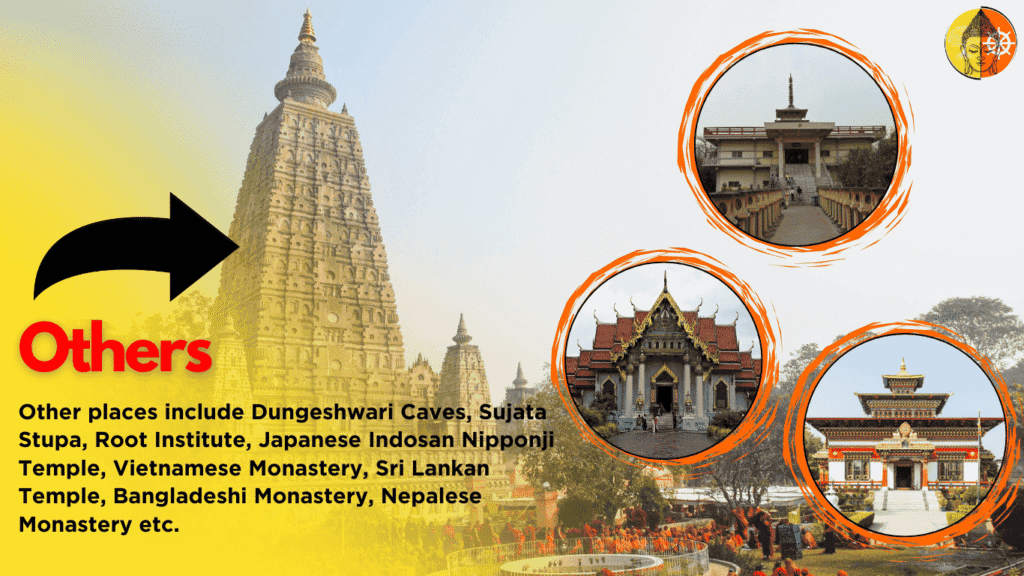
Other places include Dungeshwari Caves, Sujata Stupa, Root Institute, Japanese Indosan Nipponji Temple, Vietnamese Monastery, Sri Lankan Temple, Bangladeshi Monastery, Nepalese Monastery etc.
Finally, you must visit Bodh Gaya. That is my request to you, and where are you reading this from? If you want to know or share something about Bodh Gaya, please comment. Thanks and gratitude.